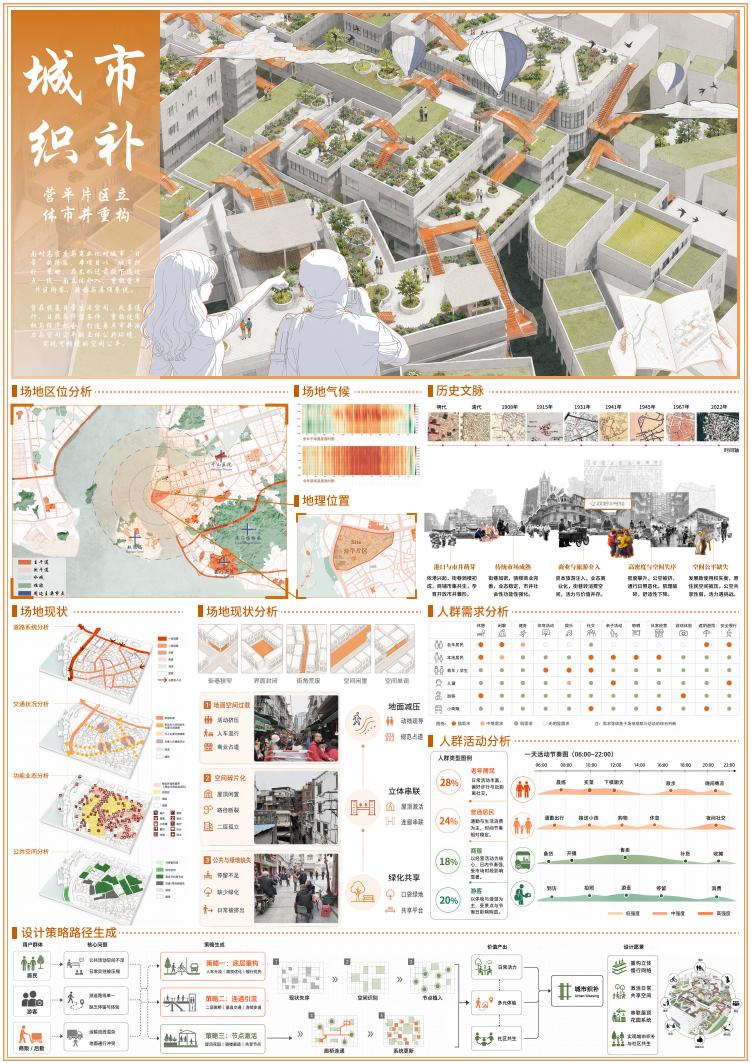
This work takes the Xiamen Yingping area as its creative subject, focusing on the real problems in the high-density old urban area, such as the compression of daily living spaces, insufficient public activity areas, the degradation of arcade grey space, and the idle rooftop resources. The creative background is derived from the research on the site's transportation, population composition, historical context, and residents' activity needs, aiming to find a more gentle and sustainable renewal method for the old urban area without large-scale demolition and reconstruction.
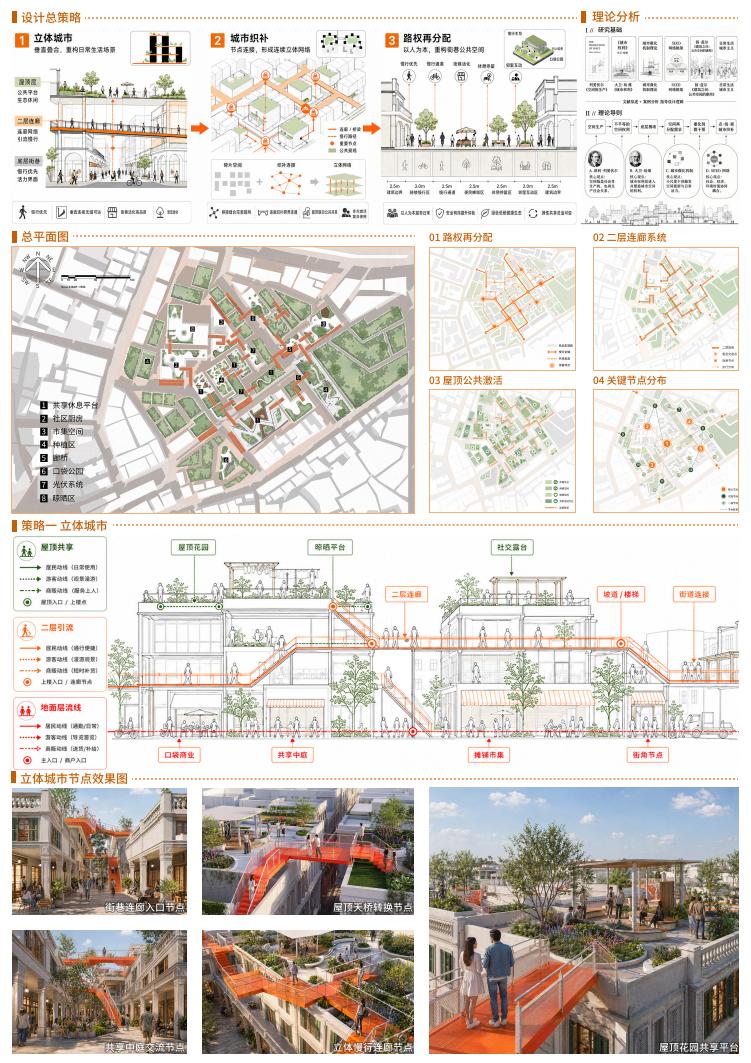
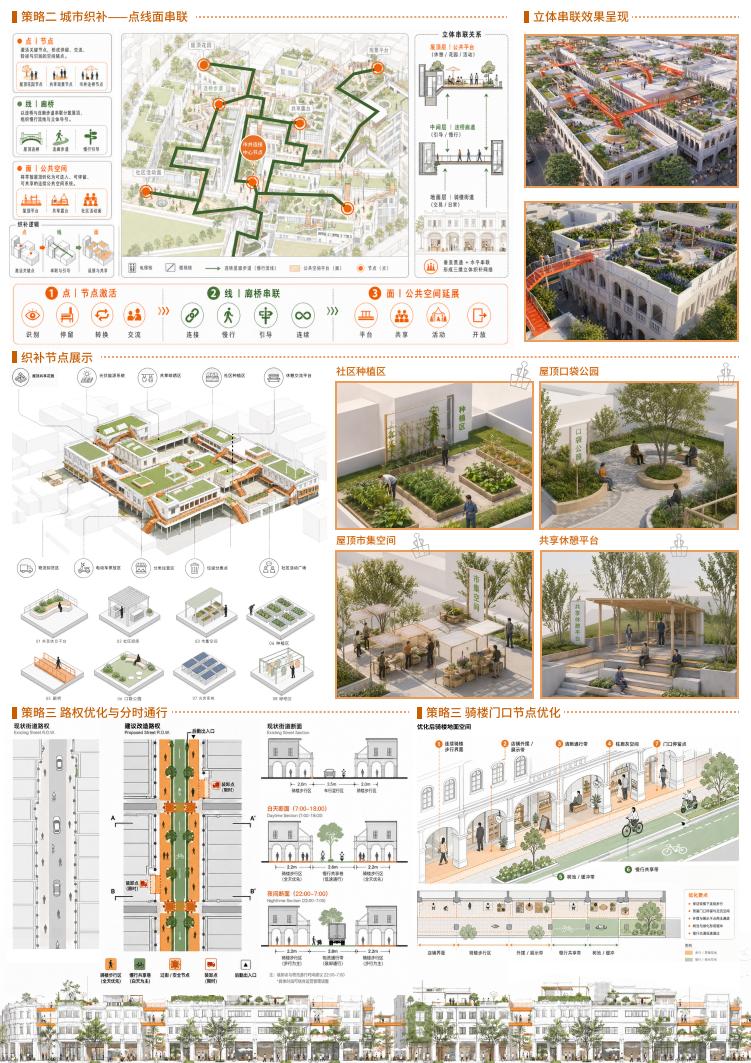
The core concept of the work is "urban patch repair", which involves small-scale, continuous spatial interventions to repair the fragmented street and alley relationships and public life networks. The design follows the strategy of "point - line - surface": activating stays and exchanges through nodes, connecting the second floor and the roof with orange corridors, and expanding public space with rooftop gardens and shared platforms. The main elements include arcades, rooftop greening, vertical walkways, rest nodes, market platforms, wayfinding systems, and community activity spaces, emphasizing the symbiosis of residents' daily life, tourists' experience, and commercial vitality.
Project Background & Concept
Focusing on the Yingping area of Xiamen, this project addresses pressing issues in high-density historic neighborhoods, such as the compression of daily living spaces, a shortage of public venues, the degradation of arcade (Qilou) transitional spaces, and the underutilization of rooftop resources. Grounded in comprehensive research on site traffic, demographics, historical context, and residents' needs, the project seeks a gentler, more sustainable approach to urban renewal without resorting to large-scale demolition and reconstruction.
Core Concept: Urban Stitching
The core concept is "Urban Stitching"—repairing fragmented alleyway relationships and public life networks through small-scale, continuous spatial interventions. The design employs a "Point-Line-Surface" strategy: activating nodes for lingering and social interaction, linking the second floor and rooftops with orange corridors, and expanding public space through rooftop gardens and shared platforms. Key elements include arcades, rooftop greening, three-dimensional walkways, resting nodes, market platforms, wayfinding systems, and community activity spaces, all emphasizing the symbiosis of residents' daily lives, tourist experiences, and commercial vitality.





 吉隆坡办公室 Pantai Hillpark Phase 1 Jalan Pantai Murni 1, Pantai Dalam 59200 Kuala Lumpur, Malaysia 区域合作网络 香港 · 首尔
 +60 11-1668 7852
 official@asia-design-week.com