


Yang Ke (Leader)
Director of the Product Design Undergraduate Program, China Academy of Art's Nantes Design Joint College; Council Member of the Asia Design Week Organizing Committee

Goh Yi Sheng
Associate Professor, Dean of the School of Architecture and Design, Sunway University, Malaysia

Wang Li
Visiting Professor, Kyung Hee University, South Korea; Council Member of the Asia Design Week Organizing Committee


Team Members: Ren Aonini, Hong Xiaotong, Chen Jisi, Liu Kanghua, Chang Liwen
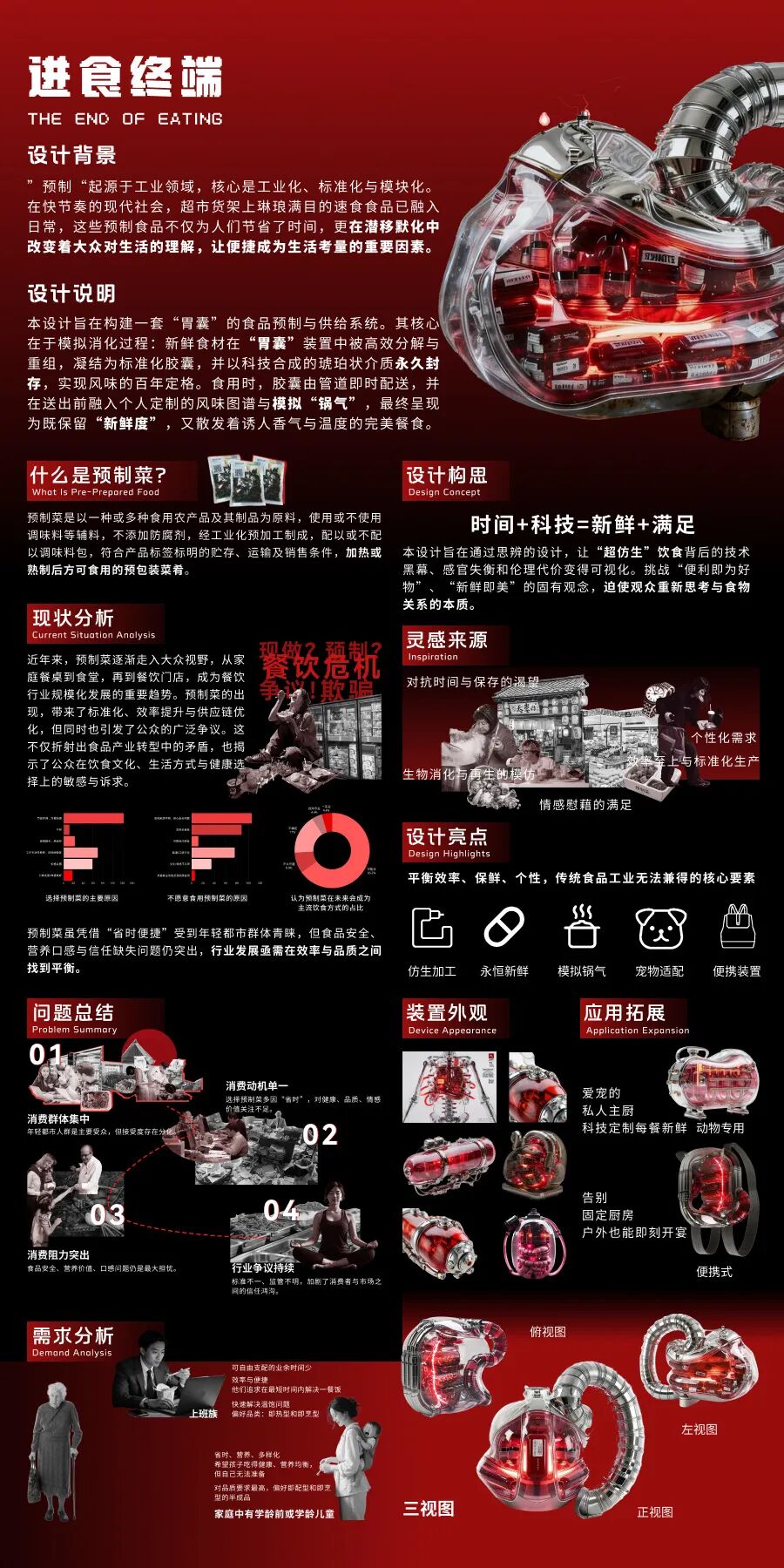
Design Description:
As technology endows humans with the near-"immortal" ability to preserve food, it simultaneously strips away our skills in handling food ourselves. Confronted with this mode of eating, people begin to question whether the crisis of trust in food can be resolved.
This design aims, through speculative design, to make visible the hidden technological mechanisms, sensory imbalances, and ethical costs behind the "hyper-bionic" diet. It challenges the ingrained notions that "convenience is good" and "freshness is beautiful," compelling viewers to rethink the essence of their relationship with food.
By simulating the entire process of "dropping off – preserving – regenerating – consuming," this installation推演 the absurd trajectory of prepared food from "industrial preservation" to "digestive regeneration." Viewers are deceived visually and olfactorily into believing they are encountering "freshness," yet they must confront psychological discomfort and dislocation.
The question it poses is: When technology can infinitely extend the perception of freshness in food, does "freshness" still hold any real meaning? If "freshness" is merely an illusion packaged by algorithms and devices, are we accepting food, or a lie shaped by technology? Behind convenience and efficiency, are humans gradually losing their perception of the "present moment" and the warmth of亲手 creation?


Team Members: Meng Litong, Li Han, Sun Xianyun, Chen Yang, Yang Wei
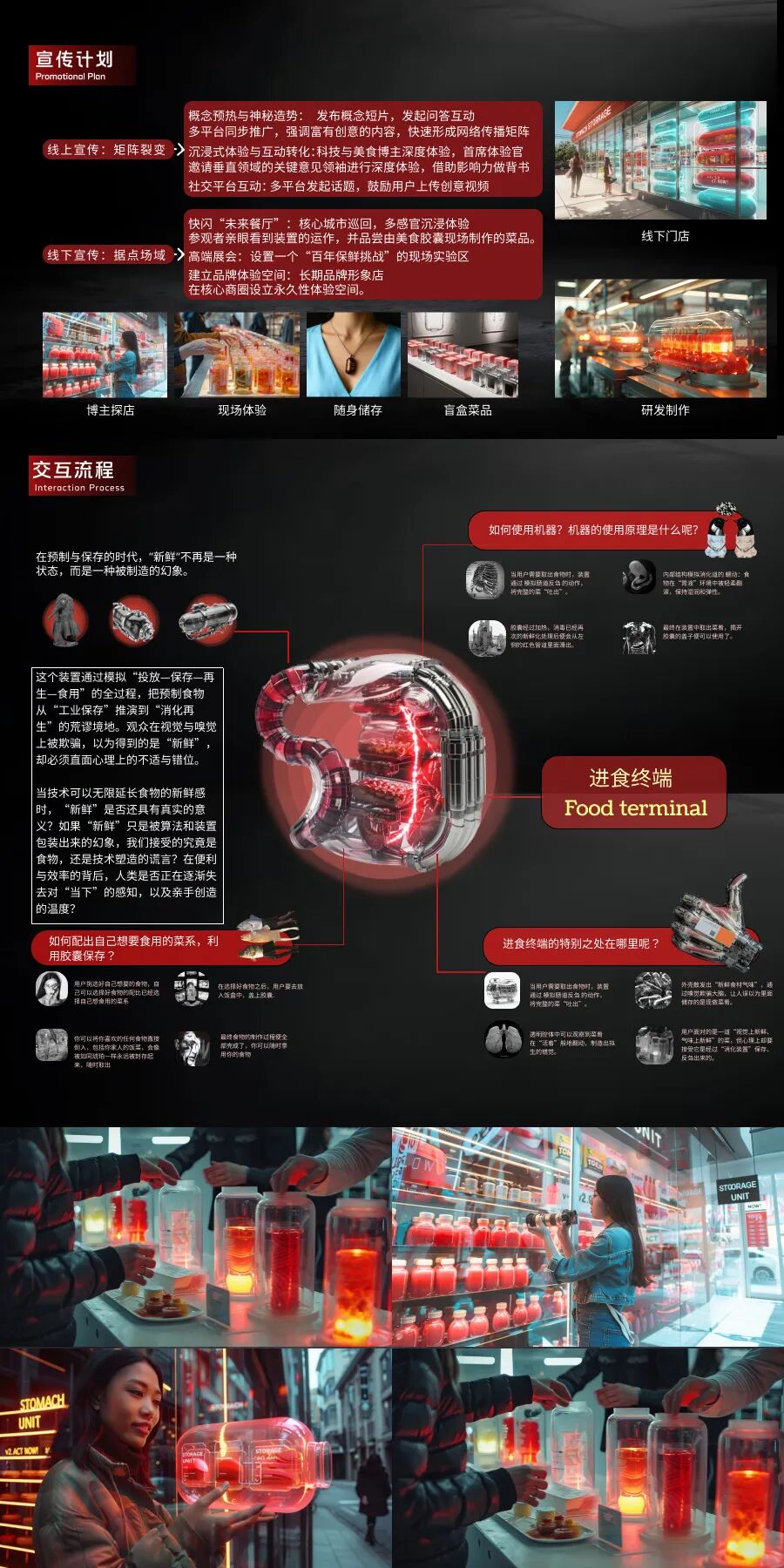
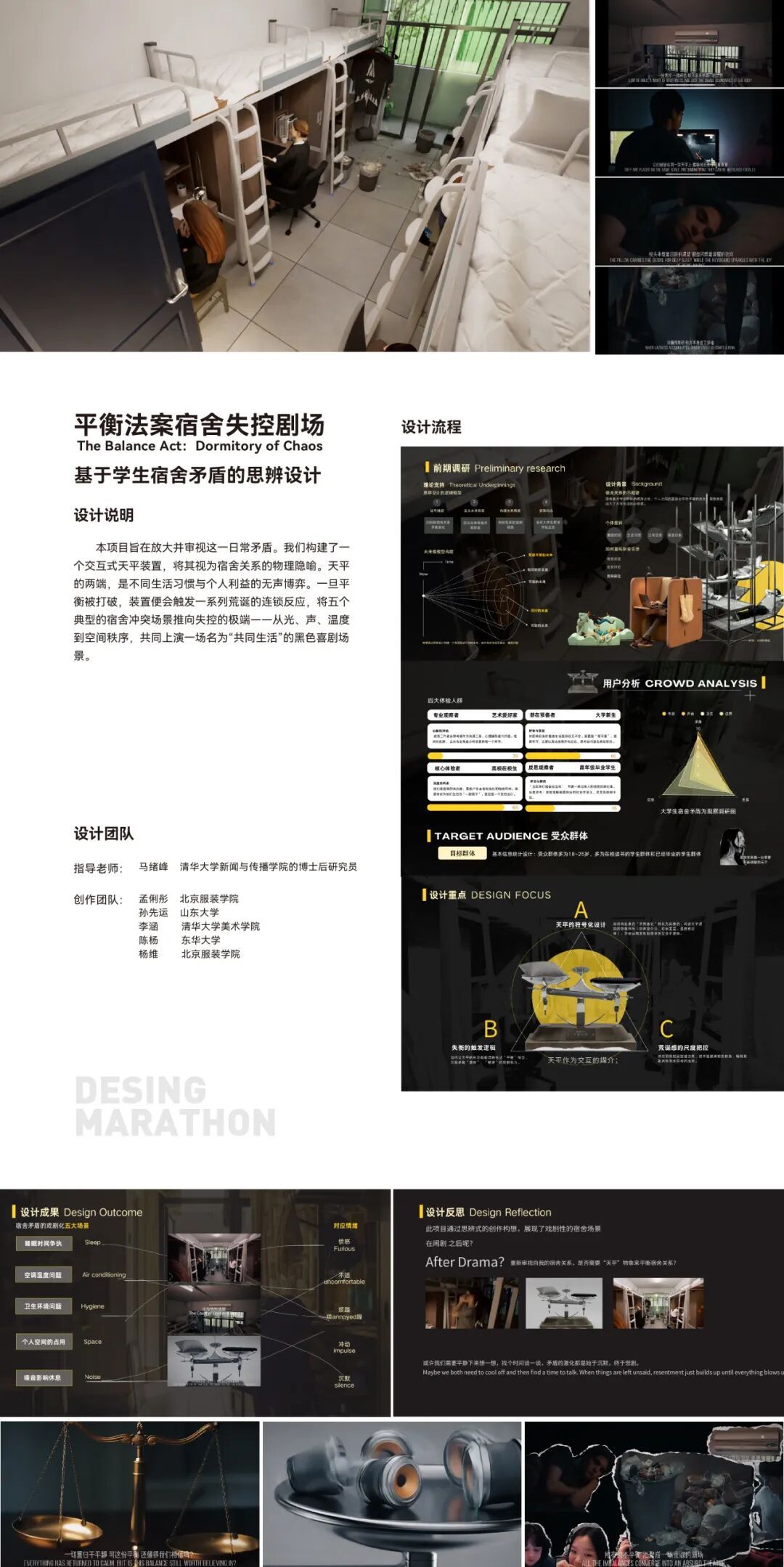
Work Description: This project aims to amplify and scrutinize this everyday. We constructed an interactive balance scale, viewing it as a physical metaphor for dormitory relationships. On either side of the scale lies a silent between different living habits and personal interests. Once the balance is disrupted, the triggers a series of absurd reactions, pushing five typical dormitory conflict scenarios to extremes – from light, sound, and temperature to spatial order, collectively staging a dark comedy scene titled .

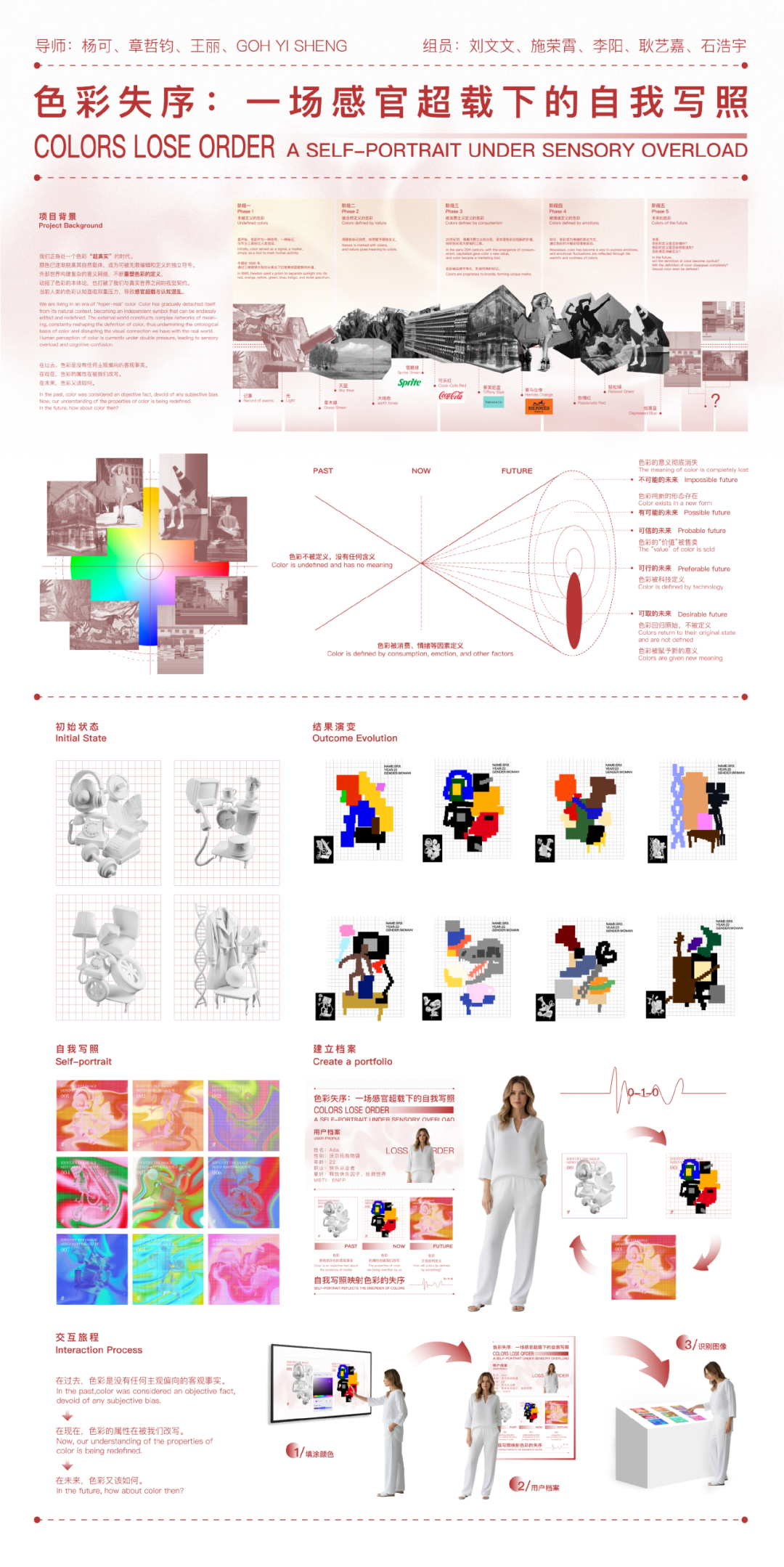
Team Members: Liu Wenwen, Shi Rongxiao, Li Yang, Geng Yijia, Shi Haoyu
Chromatic Disorder is a philosophical exploration of the essence of color. It delves into the phenomenon where color is excessively defined and manipulated, with its definition forming a silent dialectic. The work calls for people to return to contemplating the authentic nature of color after it has been stripped of all externally imposed meanings.


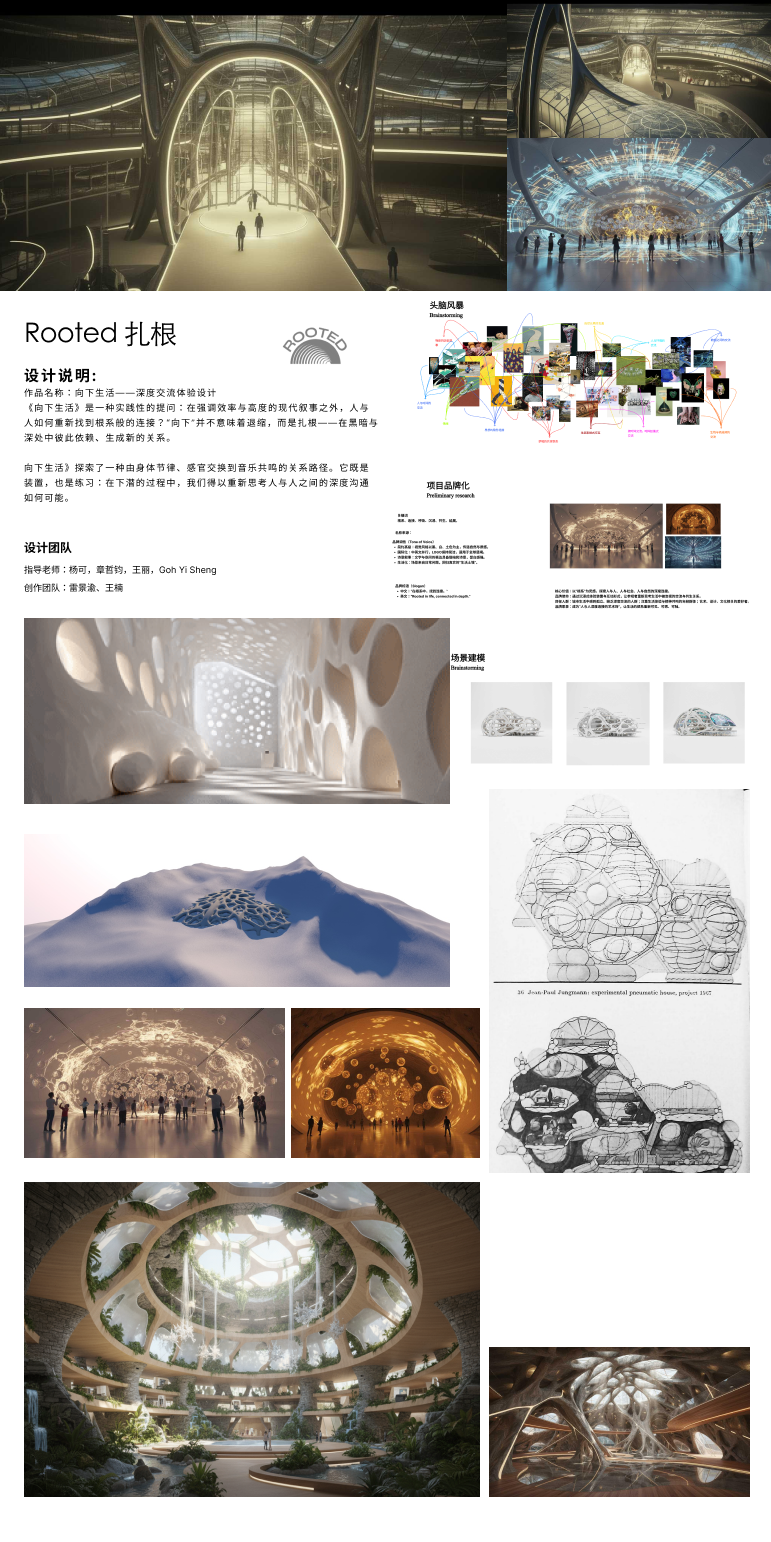
Team Members: Lei Jingyu, Wang Nan
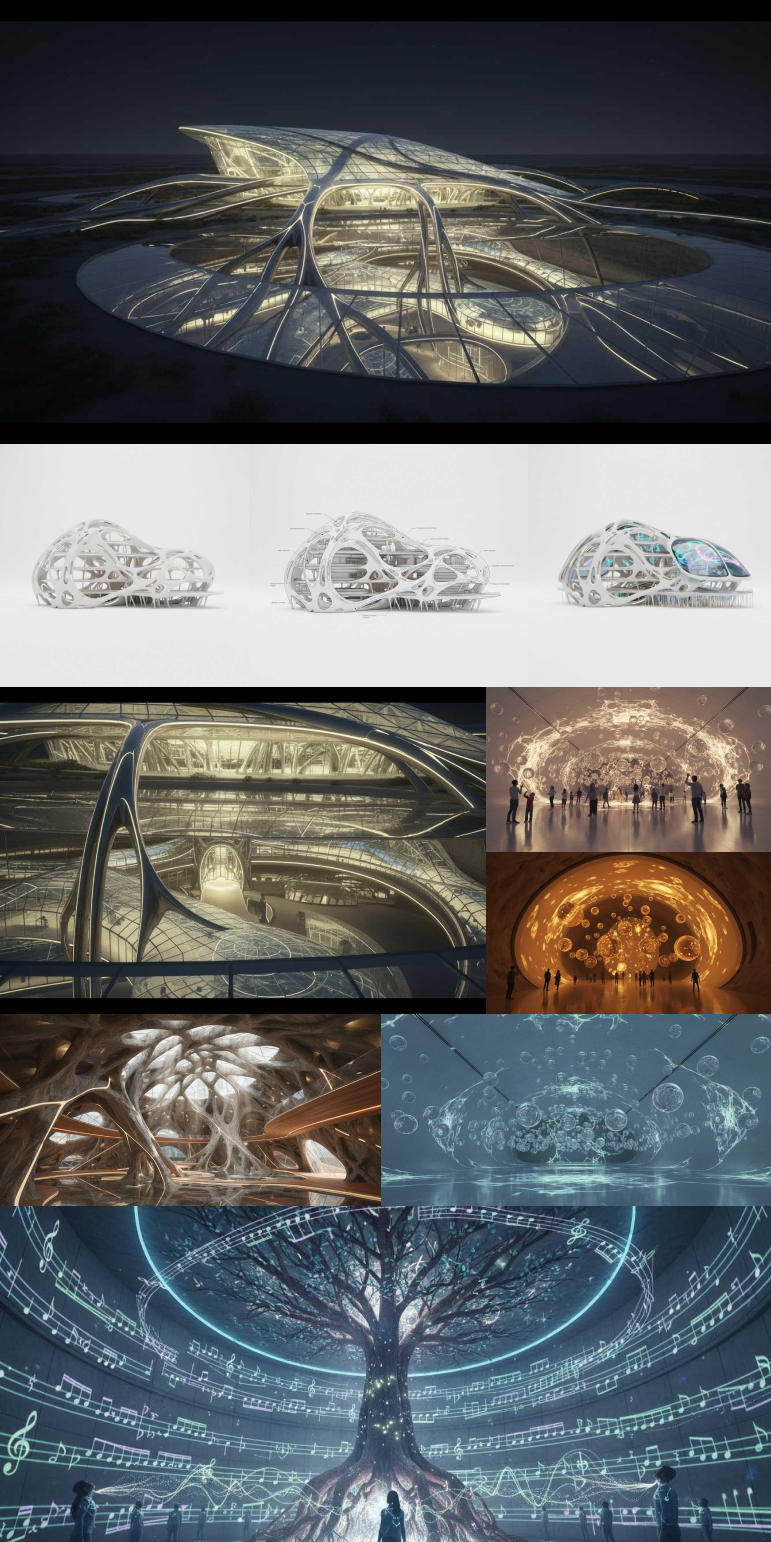
Living Downward is a practical inquiry: Beyond the modern narrative that emphasizes efficiency and height, how can people rediscover root-like connections with each other? "Downward" does not imply retreat, but rather taking root—interdependently relying on and generating new relationships in darkness and depth.
The installation consists of three interactive layers.
Layer 1: Breathing in Sync. The most fundamental rhythm of life, breathing, is translated into light and shadow within the space. Participants gradually synchronize as they move through, revealing individual rhythms as a shared sense of presence.
Layer 2: Sensory Exchange. The experience here compels one to step outside the boundaries of self-perception: my actions trigger your sensations, and what I see originates from your state. This empathetic perceptual relationship allows "me" and "you" to enter a state of coexistence anonymously.
Layer 3: Musical Synthesis. The breaths, footsteps, and sounds left earlier are collected and translated into a melody. It no longer belongs to any single individual but becomes a collective sound generated symbiotically by all participating individuals.
Through this three-layered progression, Living Downward explores a relational path from bodily rhythm, through sensory exchange, to musical resonance. It is both an installation and an exercise: in the process of diving down, we are given the opportunity to reconsider how deep communication between people might be possible.
 、
、

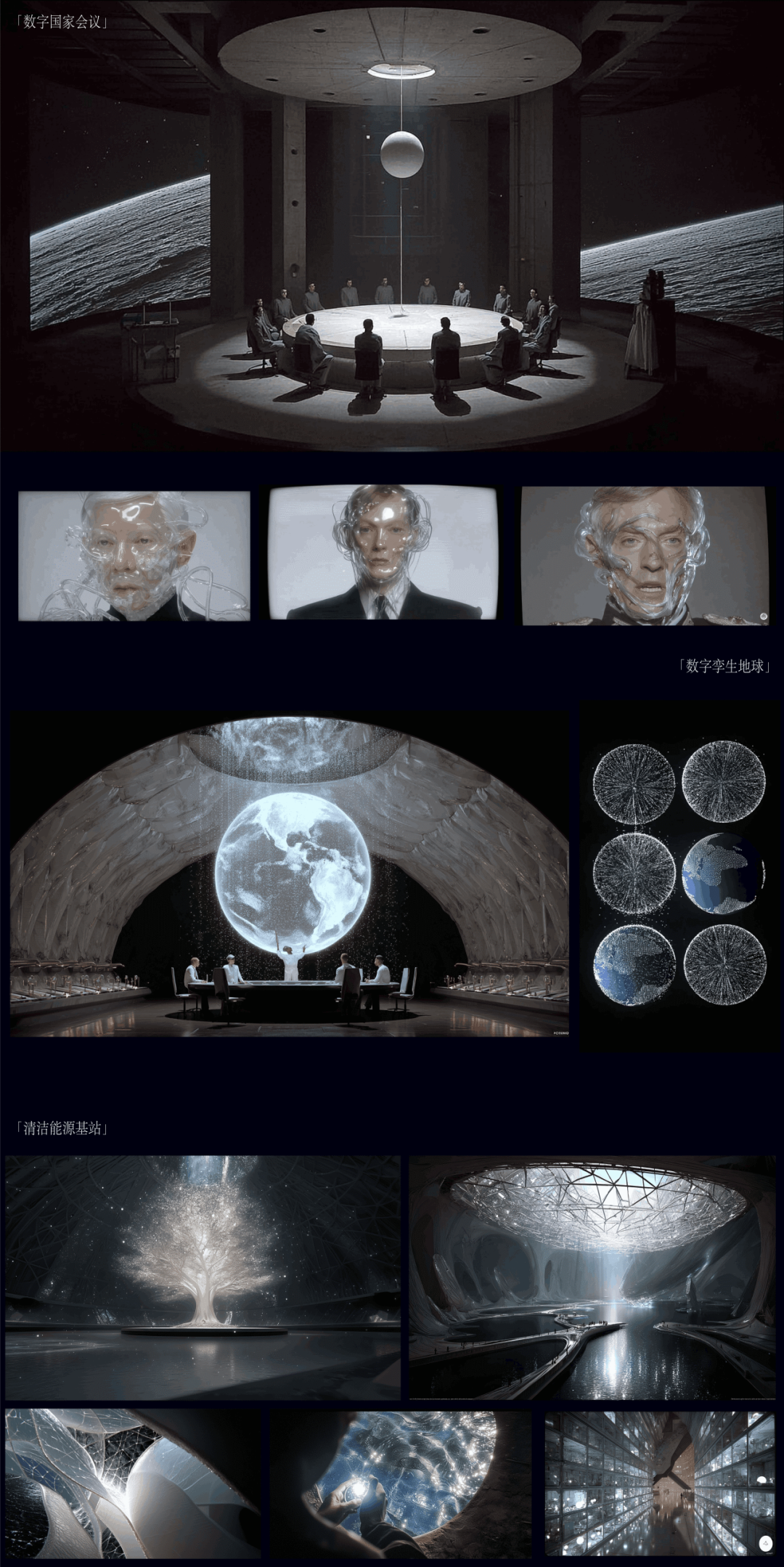
Team Members: Shi Jingyi, Zhang Yang Boya, Wang Ziyi, Yuan Jinhao, Zhan Yijia
This project envisions a future space domain, incorporating three sectors: a Space Nations Conference, a Digital Twin Earth, and Clean Energy Production.
Reflecting on a world currently dominated by hegemonism, we consider: When we observe from a more macroscopic perspective, viewing humanity and even the Earth as a single community empowered by technology, what might the future look like?
Thus, we have designed a domain in space: Here, digital avatars representing the will of each nation deliberate and make decisions. Here, Earth exists in a digital twin form, backing up data—a true "metaverse." Here, clean and efficient energy assists humanity in its expansion and exploration of the universe...
The project will be presented to viewers in an interactive VR format. Viewers can create their own digital identities, enter the three sectors within the virtual space, and engage in an interactive tour.
Through this design, we hope to envision a better future for humanity: Soaring on the wings of technology, we stand united and equal, safeguarding our development efficiently and cleanly, and even stepping into the cosmos to face the stars.






 Kuala Lumpur Office: B4-02-4, Pantai Hillpark Phase 1, Jalan Pantai Murni 1, 59200 Kuala Lumpur, Malaysia. Hong Kong Office: Room 1, 5/F, Sang Woo Building, 227–228 Gloucester Road, Wan Chai, Hong Kong.
 (+60) 1116687852
 official@asia-design-week.com